About

The region that encompasses the Himalaya-Hindu Kush mountain range and the Tibetan Plateau is widely known as the Third Pole because its ice fields contain the largest reserve of fresh water outside the polar regions. The Tibetan Plateau is the largest and highest region on earth and the source of the 10 major river systems that provide irrigation, power and drinking water for over 1.3 billion people – nearly 20% of the world’s population. MapThe future is uncertain. Many countries are suffering serious water stress; planned infrastructure projects, including dams, are raising both regional and cross-border tensions and may have severe environmental impacts. Many people in the Himalayan watersheds face high risks from flooding, water shortage and pollution. Future population growth, climatic variation and increasing demands on scarce water resources from agriculture and industry will increase these risks. Mitigating them will demand high levels of cooperation.

Informing the discussion

The region’s river systems are interrelated and cross many national boundaries. Protecting vital systems and restoring damaged ones demands systemic understanding, sound planning, good decision making. This requires the most comprehensive information possible to foster the building of expertise, long-term thinking and collaboration between governments, experts and civil organisations. thethirdpole.net was launched four years ago as a project of chinadialogue.net, in partnership with Earth Journalism Network. This unique, standalone platform aims to provide impartial, accurate and balanced information and analysis, and to foster constructive debate on these vital resources from across the region. thethirdpole.net aims to reflect the impacts at every level, from the poorest communities to the highest reaches of government, and to promote knowledge sharing and cooperation within the region and internationally. We welcome your comments and contributions.

Copyright and syndication

Material published on thethirdpole.net, unless otherwise stated, is published under a Creative Commons licence and available for re-use under Creative Commons rules.

Partners

thethirdpole.net, in collaboration with our partners, aims to build networks of understanding that allows experts and media professionals, scientists and policy-makers to share knowledge and perspectives.

Earth Journalism Network

Internews Network and Internews Europe developed the Earth Journalism Network to empower and enable journalists from developing countries to cover the environment more effectively.

chinadialogue.net

chinadialogue.net is an independent, bilingual, Chinese English website that promotes communication on the environment and climate change across barriers of language and culture. It aims to inform, educate and promote equitable and constructive solutions.

Development Alternatives

Development Alternatives is a Delhi-based non-profit organisation engaged in research and action for sustainable development.

Climate Himalaya

Climate Himalaya is a coalition of civil society groups that aims to serve as a link between practice, science, policy and decision making towards climate adaptation and sustainable mountain development in the Himalayas, based in Dehradun, India.

.

Funders

thethirdpole.net is an editorially independent platform, generously supported by the UK Department for International Development (DFID). Please explore our resources page to find out more about the region

In pictures

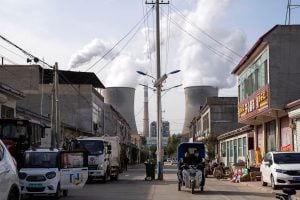
Development on the banks of the Yangtze, Chongqing, China. 70% of China’s rivers are polluted, leaving 300 million people without access to clean water.
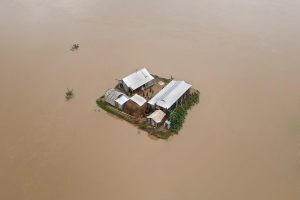
A family tries to escape flooding in northwest Pakistan. The 2010 Indus floods submerged a fifth of Pakistan, affecting 21 million people. The frequency and severity of climate-related disasters will increase in years to come.
Wild Yak on the Tibetan Plateau.The Third Pole is home to many endangered species such as the snow leopard, Tibetan antelope, and back-necked crane.
Kham Tibetan horseman in Yushu Prefecture, China. The vast alpine grassland and wetland ecosystems have long been used in sustainable ways by local communities.
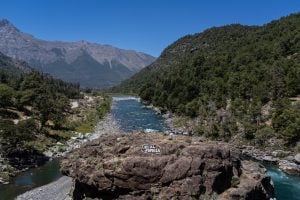
The Brahmaputra River that floods India and Bangladesh every year begins in Tibet, where it is known as the Yarlung Zangbo.
Melting glaciers in Pakistan. The effects of global warming are already evident in the Himalayas where some two-thirds of glaciers are in rapid retreat
Terhai dam on the Bhagirathi River in India. Massive plans are underway to build several hundred dams across the Himalayas, with over 150,000 megawatts of new projects proposed over the next 20 years.
Our team
team_isabel_hilton-about
team_joydeep-about
team_jianqiang-about
team_beth-about
Olivia Boyd
Sam Geall
Huang Lushan
Partners

thethirdpole.net works in collaboration with partners across the Himalaya and the world to bring regional and international experts, media and civil society together for discussion and information exchange. If you are interested in partnership, or getting involved, please contact beth.walker[at]thethirdpole.net or joydeep.gupta[at]thethirdpole.net